


Media law reform and media regulation
Almost every country in the region, save for Zimbabwe, has private broadcasters. Some countries like Swaziland, Botswana, Lesotho and Zimbabwe have initiated community radio initiatives while they wait for policy and legal reforms allowing community radio licenses.
Community broadcasting
Community media is operated in the community, for the community, about the community and by the community. It is independent, free from political or commercial interference and can, therefore, facilitate public platforms for debate and discussion and promote social agendas.
The reach of community media, particularly radio, means it provides information and a platform of expression to remote, grassroots communities that may not be represented in other media. The main challenges community radio and television faces in the region are lack of legislation, regulation and infrastructure to support the establishment and licensing of community media, and the inability to sustain themselves beyond donor seed money.
Public service broadcasting
Public service broadcasting is created, financed and controlled by the public, for the public. It is neither commercial nor state-owned and is therefore free from political or commercial interference.
Public service broadcasting informs, educates and entertains. It is an essential part of a pluralistic, diverse broadcasting sector.
Media freedom news from our chapters
Opening Remarks by Dr Tabani Moyo – MISA Regional Director at the Spaces of Solidarity Meeting
Solidarity as the shield for freedom of expression in Southern Africa 5 October 2026 Opening Remarks by Dr Tabani Moyo – MISA Regional Director at the Spaces of Solidarity Meeting Johannesburg, South Africa As we meet for the 2026 Spaces of Solidarity (SoS)...
The Quiet Return of Media Capture in Botswana
From the 2001 advertising ban that nearly crippled private newspapers to fresh claims of influence over both state and private media, familiar patterns are re-emerging in Botswana’s media landscape. As early optimism for reform fades, deeper questions arise about...
Urgent need for AI legal sector policy framework
Last week, the Supreme Court of Zimbabwe issued a landmark ruling declaring invalid legal submissions prepared with the help of artificial intelligence (AI) that included fictitious case citations. The ruling arose from the Pulserate Investments (Pvt) Ltd v Andrew...
Legislators pledge to support co-regulation of the media
On 23 October 2025, MISA Zimbabwe engaged members of the Parliamentary Portfolio Committee on Information, Media and Broadcasting Services, along with several other stakeholders, regarding the proposed Zimbabwe Media Practitioners Bill and Zimbabwe Media Commission...
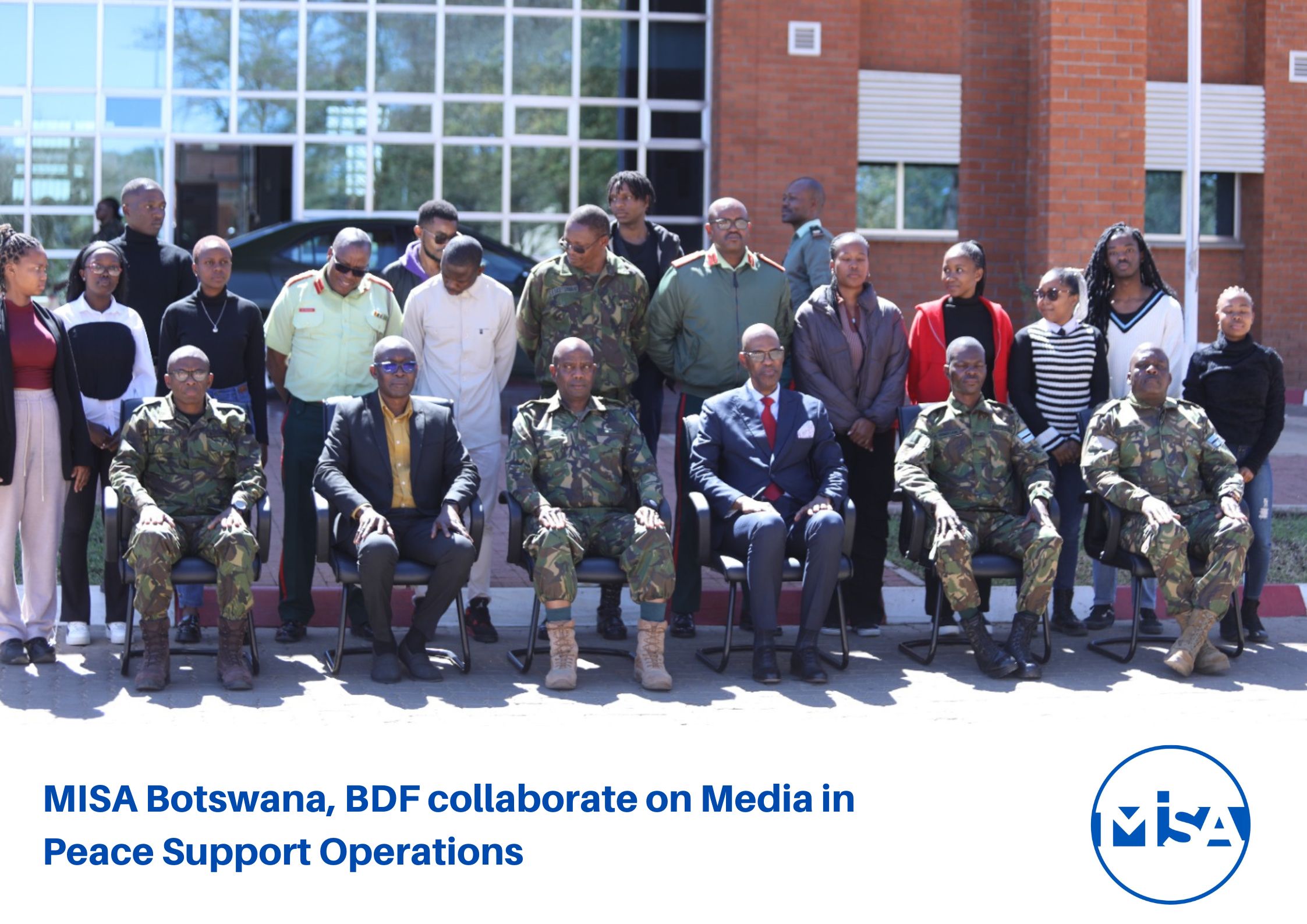
MISA Botswana, BDF collaborate on Media in Peace Support Operations
On August 20, 2025, the Media Institute of Southern Africa (MISA) Botswana chapter partnered with the Botswana Defence Force (BDF) to deliver a guest lecture on: Media in Peace Support Operations at the BDF Staff College in Gaborone. The initiative, the second of its...