


News and press statements
Opening Remarks by Dr Tabani Moyo – MISA Regional Director at the Spaces of Solidarity Meeting
Suffice to say that our region has never, in its entire history, faced such a crossroads in the wake of the USA’s global funding cuts and the shifts in focus by the majority of traditional allies who supported expression as the rubric for the enjoyment of human rights.
Opening Remarks by the MISA Regional Chairperson, Mr Jeremias Langa, at the Spaces of Solidarity (SoS) Forum
Today marks an exciting step forward for the next generation of media defenders as we prepare to launch the DW Akademie Freedom of Expression (FoX) Fellowships.
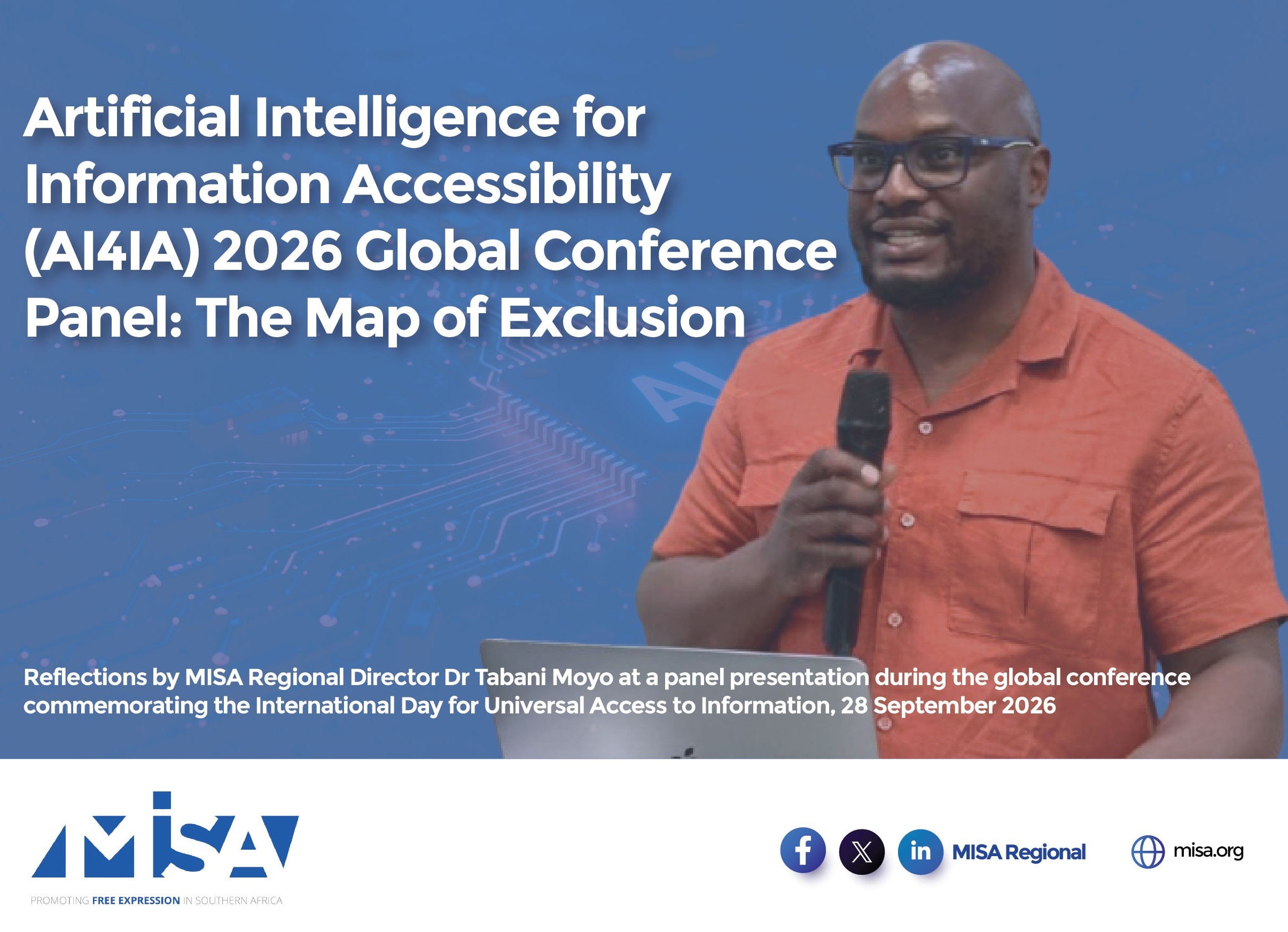
Artificial Intelligence for Information Accessibility (AI4IA) 2026 Global Conference Panel: The Map of Exclusion
This is why I’d ask us, across the sessions ahead, to peel the onion rather than accept the slogans at face value. “Leave no one behind.” The “last mile” of connectivity.
Upholding information integrity and democratic resilience in Southern Africa
Addressing information disorder requires sustained capacity-building and regional cooperation, as exemplified by initiatives such as MISA’s Connected Media, Informed Citizens project, which supports journalists and citizens in combating disinformation.
Access to information and information integrity inseparable in the digital age
The Zimbabwe National Artificial Intelligence Strategy (2026 – 2030) presents an opportunity for the country to move beyond being a consumer of technologies developed elsewhere and to build greater domestic capacity in AI.
Strengthening the media ecosystem approach key to SADC development
“A stronger media ecosystem is key to building a sense of belonging to our collective …
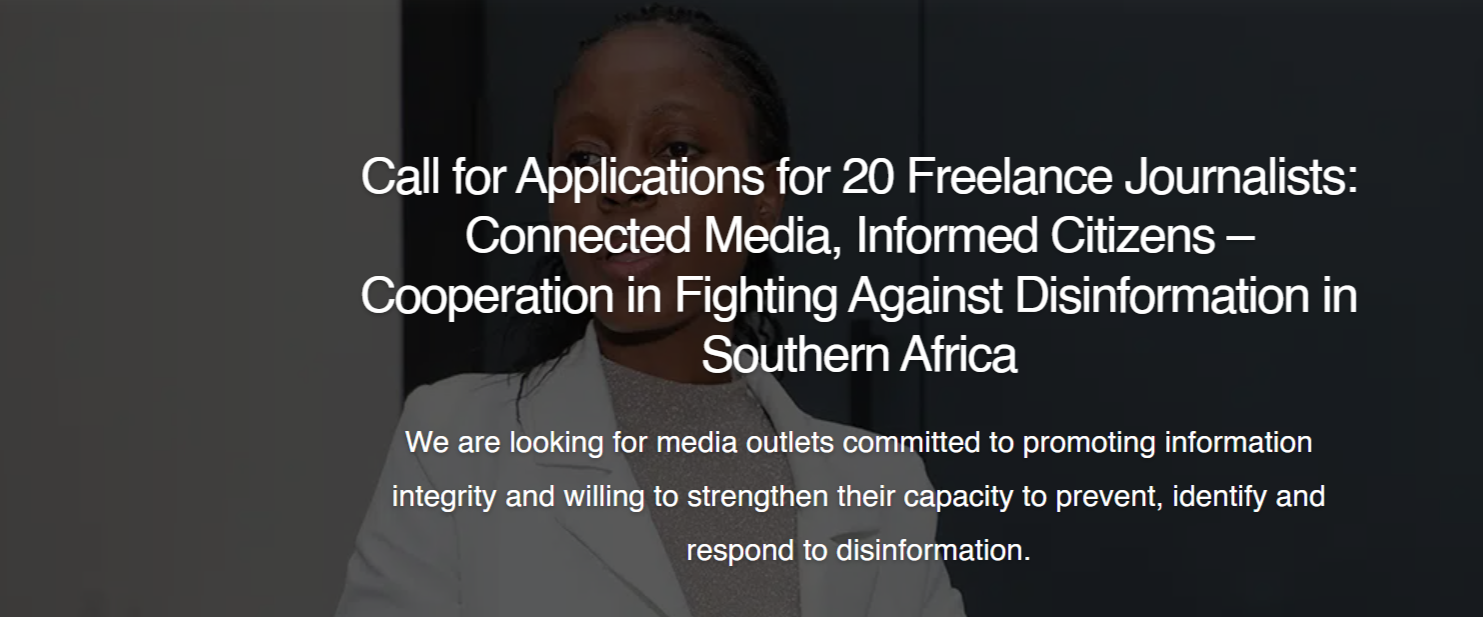
Call for Applications for 20 Freelance Journalists: Connected Media, Informed Citizens – Cooperation in Fighting Against Disinformation in Southern Africa
Closing date September 25th 2026 at 11.59 p.m. (GMT + 1).
MISA Regional preliminary statement on media freedom, digital rights and access to information in the 2026 Zambia general elections
MISA Regional acknowledges the enactment of the Access to Information (ATI) law and the repeal of criminal defamation of the president as historical milestones. However, these are paper victories that have been neutralised by institutional silence.
Internet affordability and access in Zimbabwe
According to POTRAZ’s 4th Quarter 2025 report, the internet penetration rate stood at 84.55%. Last year, the local operator NetOne reported that its 3G network covers approximately 50 percent of the geography and 80 percent of the population. Its 4G network reaches 32 percent of the geography and 69 percent of the population.